Showing posts with label Red Dead Redemption. Show all posts

Monday, July 22, 2013

Five of the Coolest Methods of Video Game Transportation

A vital component of most video games--especially open world games--is some sort of method of transportation. While most games have some sort of mount or vehicle, some games go a step above and give you a really awesome form of transportation. Here is a list of five of the most excellent forms of transportation in video games. These made me squeal with excitement, or feel like a total badass while moving around my video game world. The only rule here is that the method of transportation had to be beyond ordinary.

Actually, that's a lie. There is another rule. For the method of transportation to count on this list, it needs to be directly steered, controlled, or piloted by the gamer. 

1) Four Horses of the Apocalypse (Red Dead Redemption: Undead Nightmare)


While Epona is my favorite horse in ANY video game, I have to say that the downright coolest equine modes of transportation are the Four Horses of the Apocalypse in this DLC for Red Dead Redemption. I’m particularly enthusiastic about these mounts due to the fact that I’ve always been interested in all types of mythology. The task of collecting the horses, combined with their really awesome designs, put them on my list. And how can you not think it’s completely badass to ride around on Death, who causes zombie heads to explode as you speed past?

2) Loftwing (The Legend of Zelda: Skyward Sword)


Though the Loftwing is not Epona, the Loftwing is pretty excellent (I promise, this is going to be my last Epona reference today). In Skyward Sword, Link flies the special Crimson Loftwing—he’s your primary mode of transportation around Skyloft and the rest of the world. The Loftwings are shown to have personalities—something that is rare for mounts in video games--and are representative of their riders (even down to unfortunate haircuts). While the mechanics of this birdsportation is similar to many other mounts, the gorgeous environment surrounding your flight elevates travel by Loftwing into excellent status.

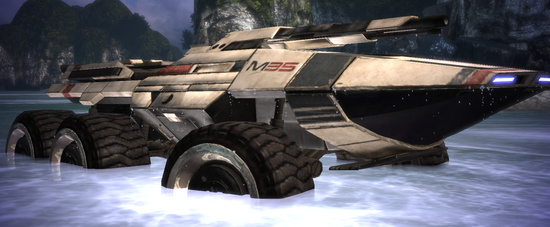
3) Mako (Mass Effect Series)


The Mako is my favorite “traditional” vehicle in video games, probably because I drive like a maniac (don’t worry, I don’t IRL). It handles pretty much any damage you can do to it, and will right itself whenever it’s flipped over. It’s pretty much the perfect all-terrain vehicle, which means that I can drive it through almost anything and still end up where I want to go. Conceivably, as long as you don’t drive off a chasm, or into lava, the Mako will get you to your destination (this is a guess, as I have yet to destroy the Mako). It means that there’s nothing stopping me from getting from Point A to Point B—at least, nothing that the mass accelerator cannon can’t handle. Finally, I will leave you with two words that will solidify—beyond a doubt—the fact that the Mako belongs on this list: propulsion jets.

4) DaVinci’s Flying Machine (Assassin’s Creed Series)


I found the transportation choices in the original Assassin’s Creed game to be underwhelming. Everything took forever, and my horse would often disappear, requiring me to make people very cross when I stole theirs (and, sadly. being shot and stabbed at can slow you down quite a bit). It seemed like they were trying to make amends when they introduced the Flying Machine in Assassin’s Creed II. Unfortunately, the machine has to go through a few iterations before it can be a truly reliable method of transportation. For example, you learn early on that it’s susceptible to flames—despite needing heat to maintain altitude. Eventually (in Assassin’s Creed: Brotherhood), Ezio also takes it upon himself to destroy all of the more effective Bomber flying machines, ensuring that the Borgia will not be able to use the Bombers against him (or anyone else they’re being jerks to). Still, the Flying Machine is a fun ride in all iterations (except, perhaps, the tragic first attempt), and awesome to use while you have the chance.

5) Portal Gun (Portal)


What do you mean, the portal gun isn’t a form of transportation? Of course it is! If I had a portal gun I could get from my bedroom to the kitchen in two seconds flat. Heck, if I had a portal gun, I could conceivably get from anywhere to anywhere in no time at all (assuming the walls were portal gun compatible, and I didn’t accidentally shoot the orange portal twice). The portal gun is a truly revolutionary form of transportation, and one that needs to be invented for realsies. I would save so much on gas money.


Well, that was my Top Five list! And I know I am missing a heck of a lot of excellent methods of transportation. What do you think should be on this list?

Saturday, April 6, 2013

Best Video Game Character Introductions

Earlier this week, IGN ran an article called The Best First Encounters in Video Games. It listed those character introductions that the author thought were the coolest or had the biggest (personal) impact on the player. While I agreed with the ones that I, myself, had experienced, there were a few that I thought were missing. So here's my addendum to this list--Geekphoria's Official List of Best Video Game Character Introductions. This includes re-introductions, but it must be you seeing or meeting the character for the first time in that game. So while you may know a character from a previous iteration in that franchise, if you haven't interacted with him or her before then it totally counts for this list. The list is also female-heavy, but that's probably just because female characters were largely absent from the initial list.

Warning: There may be some spoilers.

Sheik (The Legend of Zelda: Ocarina of Time)

From zeldauniverse.net
     Part of my decision to include Sheik may be nostalgia--if you've been around the blog at all, you'll know that I'm a huge fan of Ocarina of Time. It was the first game I got with my N64, and the first thing I played when I was old enough to really enjoy all aspects of a game. It's why I'll always be loyal to Nintendo, even now that I've moved on the world of HD FPS and RPGs.
     When Link awakens in the Temple of Time, it's obvious that things are not as they were when he was transported into the Chamber of Sages. Once you go outside, you see that Hyrule--though never innocuous-has been transformed into a dark and scary place. Although Sheik is certainly not a warm and fuzzy, when he appears you know you're not in this alone. Sheik catches you up on what you've missed out on, and sends you on your way with as much help and guidance as he can (while still keeping that air of mystery). Sheik is also, obviously, very bad ass. I remember wishing I could play as Sheik (which, technically, you can in Super Smash Brothers: Brawl, but it's obviously not the same). At the very least, I wanted to be best bros. When Sheik shows up, you know someone else is out there to fight the good fight which is good--although you're the hero of time, no hero should be alone.


Clementine (The Walking Dead)

From walkingdead.wikia.com
     As Lee Everett, you find yourself alone as the world begins to fall apart around you. You've seen the dead come back to life, you've been chased by them, and you're searching for help. Of course, this is the zombie apocalypse, and instead of finding help you're almost eaten. Clementine appears to help you, giving you the tools you need to kill the zombie and escape. She tells you that she has been hiding in her treehouse since the world went to hell. The zombie who attacked you had been her baby-sitter--her parents were out of town, which you know if you listened to the answering machine. She also informs you that she considered dropping a hammer on your head as you walked under the treehouse, is case you were a bad man. She's introduced as a character who definitely has some capacity to take care of herself--though she's still a kid and, you suspect, now alone in the world.  It builds up the character in your mind, while still keeping you sympathetic and making you want to take care of her. It's probably the greatest introduction on this list.


Wheatley (Portal 2)

Taken from FastCompany.com
     Ah, Wheatly. In Portal 2, you wake up in what appears to be a hotel room. It doesn't seem like any of the events of the original portal have taken place--that is, until Wheatley shows up and the whole facade falls away. Wheatley is introduced as a companion and a rescuer. He's going to help you escape from Aperture, which has definitely seen better days. Wheatley's introduction is great because he appears to be a slightly bumbling but helpful little robo-consciousness and is entertaining while helpful. Of course, then he teaches you the lesson that power corrupts. Without this initial introduction, though, Wheatley would be nothing more than GLaDOS 2.0.


Bonnie MacFarlane (Red Dead Redemption)

From RockstarGames.com
     Bonnie is introduced shortly after she saves your life. When you were left to die at the side of the road (something that apparently happens to John Marston more than it should), she takes you to the doctor and lets you recover at the ranch she and her father run. It's great to see a female character introduced as a savior, and the first few minutes of character building show that Bonnie's tough, strong, driven, and competent. I wish the character was a little more developed throughout (you spend most of the game away from her and the ranch after this set of quests), but Bonnie certainly makes a good first impression.


Jill Valentine (Resident Evil 6)
From Gamespot.com
     Jill Valentine is the only character on the list that was first introduced outside of the listed game. Jill, of course, is a hero in her own right. We've played as her, and kicked zombie and bad guy ass. We know that she has everything under control and--thanks to cut scenes--know that she has died fighting Albert Wesker. Of course, later on in the game we find out that she hasn't died. Wesker introduces her to us again, but she's under some type of mind control (and suddenly blonde). Chris suddenly experiences ALL OF THE EMOTIONS, but so does the player. Here's a character you've grown attached to over the years, rendered as a fraction of herself and not under her own control. You want to help Jill, but it's not really a damsel-in-distress moment (especially as she proceeds to kick your ass). You want Jill to get back to being awesome, and that's now your main motivation.


Do you agree with my choices? Disagree? Let me know in the comments.

Sunday, January 6, 2013

Gamer Drama: A Story Critique of Red Dead Redemption

       I’m going to begin this edition of Gamer Drama with a quote from the IGN review of Red Dead Redemption, written by Erik Brudvig (you can find the full review here).

"It's tempting to say that Red Dead Redemption is ahead of its time, but the reality is that this is a game of and for the times. Rockstar shows an uncanny ability to hold a mirror up to society and remind us that present day hot button issues like racism, immigration, federal government power and personal freedoms are not only nothing new, they are deeply ingrained in American society. They are forces that helped to shape America into what is is, and their inclusion in Red Dead Redemption gives it a sense of authenticity that videogames in general lack."

       This is a grandiose statement, to be sure. I enjoyed my time playing Red Dead Redemption, but I wouldn’t say that Rockstar produced a social commentary. I think that it’s difficult to say that when the game is an RPG, where the options are so broad and you could play the character in any way. Games are better at being social commentaries when the player’s actions are more restricted. It’s not that I didn’t see the “presence of racism, immigration, government power, and personal freedoms” in the game—it’s that I didn’t see the game make any grand statements about these hot-button issues. However, that could possibly be the result of the fact that my moral compass in games tends to point toward “amoral” in the first play-through—the good and the bad that I do cancel each other out, meaning that the game’s reactions to me will lean toward neutrality. I’m not convinced that is the case, though I don’t think it makes the game any less enjoyable.

Synopsis

       John Marston was once an outlaw, until his friends left him for dead and he decided to settle down with his wife. But the law has finally come for him, in a way. His former gang partners, the ones who left him bleeding to death, are causing quite the disturbance in the American West. The Bureau of Investigation takes Marston’s family into custody, in order to ensure his cooperation in capturing the men who were once his friends. He travels between the American Southwest and Mexico in an attempt to track down Bill Williamson, Javier Escuella, and Dutch van der Linde (the leader of the gang), and bring them to justice. Along the way, Marston meets a variety of people and helps or hurts them through quests, earning allies and making enemies.

The Setting

       As stated above, Red Dead Redemption takes place across the border of the American Southwest and Mexico (in an area inspired by the Rio Grande basin). Marston travels through deserts and woodlands, spending time in small towns, growing cities, and ranches. Rockstar Games did an excellent job of presenting the vastness and promise of the American West through the open-world setting of the game. While on your horse, you can travel from one end of the map to the other, with no breaks in the gameplay. You can get lost, you can travel for periods without seeing another person (or NPC), and you can approach a destination from almost any angle.
       While the setting in Red Dead Redemption is nuanced and detailed, it does not really act as a constraint on the character or (like in the last edition of Gamer Drama) as an entity itself. However, it does provide challenges to the character and the gamer—even if it doesn’t really mold the gameplay itself, it still manages to contribute to the atmosphere. Also, it was obviously crafted with passion, which makes it that much easier to appreciate.
        How does a great (though not excellent) setting contribute to the storyline? The wide, open spaces of Marston’s story reinforce the fact that Marston is alone in his quest—although he makes some allies, few stay with him for long and few provide support that go beyond their desire to achieve their own goals. Marston has few friends, and riding through the desert between quests makes this highly apparent.

The Characters

       John Marston is the main character. He has turned from a life of crime and wants nothing more than to create a thriving ranch with his family. However, his family was taken away from him and he was forced to return to a life where people are constantly trying to kill him. He wants to finish the task of reigning in his former gang partners, and get back to his family and farmstead. Which he tells us again and again. And again. Marston lets us know that he’s a changed man. However, because of the player’s ability to choose between moral and immoral actions, he does not always show that he has changed. Marston makes many decisions that show that this change may not be that deep. He is willing to do “bad” things to reach his goal—and often puts the blame on others. He chooses to associate with people who are doing amoral things (and do these things alongside them). I know that doesn’t necessarily mean that he’s a bad person. I know that the game is written so that he really has no choice. However, it would be better if he acknowledged these misdeeds and stopped asserting how he has changed. I could shoot an entire street of innocent people, and in the next cut scene John would bemoan the fact that he had changed and the government won’t leave him alone.
        There is another issue related to John Marston’s character—because the choices that the player makes determine Marston’s moral alignment, there really isn’t any sort of character development for him. (Most of the other characters remain underdeveloped, as well). This conflicts with the idea of “redemption”—do Marston’s actions truly redeem him, when he can act as immoral as the player desires? Has he changed at all? There’s another possible argument for the “redemption” aspect of the game—that Marston isn’t redeemed in his own eyes or the eyes of the law, but in the eyes of his son. Of course, the interactions between John and Jack are limited in the story. You see his son warm up to John after his return to his family, but there’s not a lot to indicate that he has truly been redeemed.
        Outside of John Marston, Red Dead Redemption has a very large cast of characters. Few of them are redeemable or likable, as you’d expect from a Western. Still, they are all interesting and intriguing (which you can’t really say for the protagonist). It is these minor characters that drive the story. Marston’s first attempt to capture one of the members of his old gang leaves him bleeding by the side of the road. This leads him to depend on others to get him near his targets—which also means that he must work for their goals before he can ultimately pursue his. While there is little character development for these individuals, this isn’t a problem—many of them only last two or three quests, and then disappear (or are killed). Each of these characters plays an important role in helping Marston’s story to progress—I cannot think of one that seemed extraneous. Overall, the minor characters were more intriguing than the main characters (Marston or any of his former gang partners).

The Payoff

       Is John Marston redeemed at the end of the game? As I mentioned before, you could argue that he’s been redeemed in the eyes of his son, but not in the eyes of the government. Some people have argued that the lack of redemption related to the government meant that he was trying for redemption, but wasn’t able to achieve it. I think that people who argue this are ignoring a vital part of the story. However, fearing spoilers, I’m unable to elaborate on this (the internet hates spoilers).
       Did I feel like the ending repaid my efforts in playing the game? I’m not sure. It feels like the main storyline ended abruptly, then the game dragged out until it finally ended. For the last half hour or so of gameplay, I kept hoping that the game would end after current quest. I felt like one of those people who complained about the ending of Return of the King.   

Grins and Gripes

  • I probably had a lot more fun playing at being a ranch owner in the last chapter of the game than I should have. I remain unashamed, however.
  • Despite the fact that the game was released in 2010, it was still very glitchy (and I downloaded a few patches for the game).
  • I was extremely annoyed by the character Luisa. She’s a smart and passionate young Mexican freedom fighter, dedicated to the revolution. When she meets John Marston, she tells him about her fiancĂ©—Abraham Reyes, the leader of the local rebellion. When Marston meets Reyes, it becomes obvious that Reyes is only using Luisa. I felt that Luisa’s character would be smarter than that—however, she remains completely faithful to him and the rebellion.
  • A particularly good female character is Bonnie MacFarlane. She is helping her ailing father, but basically runs the family’s ranch herself. Bonnie is strong and passionate about her life’s work. Although it becomes apparent that she has feelings for John, her character doesn’t become secondary to these feelings (she doesn’t even allow John to see them).
  • The graphics in this game are excellent—especially the animation. As someone who has spent a lot of my life around horses, I appreciated the attention to detail and lifelike movements.
  • Don’t play the game on an old television set. I mostly played this game on a hand-me-down tube TV (though it was an older set, it didn’t have that poor of a picture). I rode my horses off cliffs more often than I would like to admit. However, I bought a Plasma TV over the summer and picked up the game again (I was frustrated with trying to play it on the old television and stopped for a while). I didn’t have any problems with the graphics once I started playing on the plasma.

Rating: 7/10

For the upcoming edition of Gamer Drama, I'm going to review the Ghostbusters Wii game. Spoiler alert: I loved it. However, I want your help in choosing the next next game. Here's the poll--I'll announce the winner at the end of the next edition of Gamer Drama (due in two weeks).


Which game should I play and review for the next Gamer Drama?
  
pollcode.com free polls